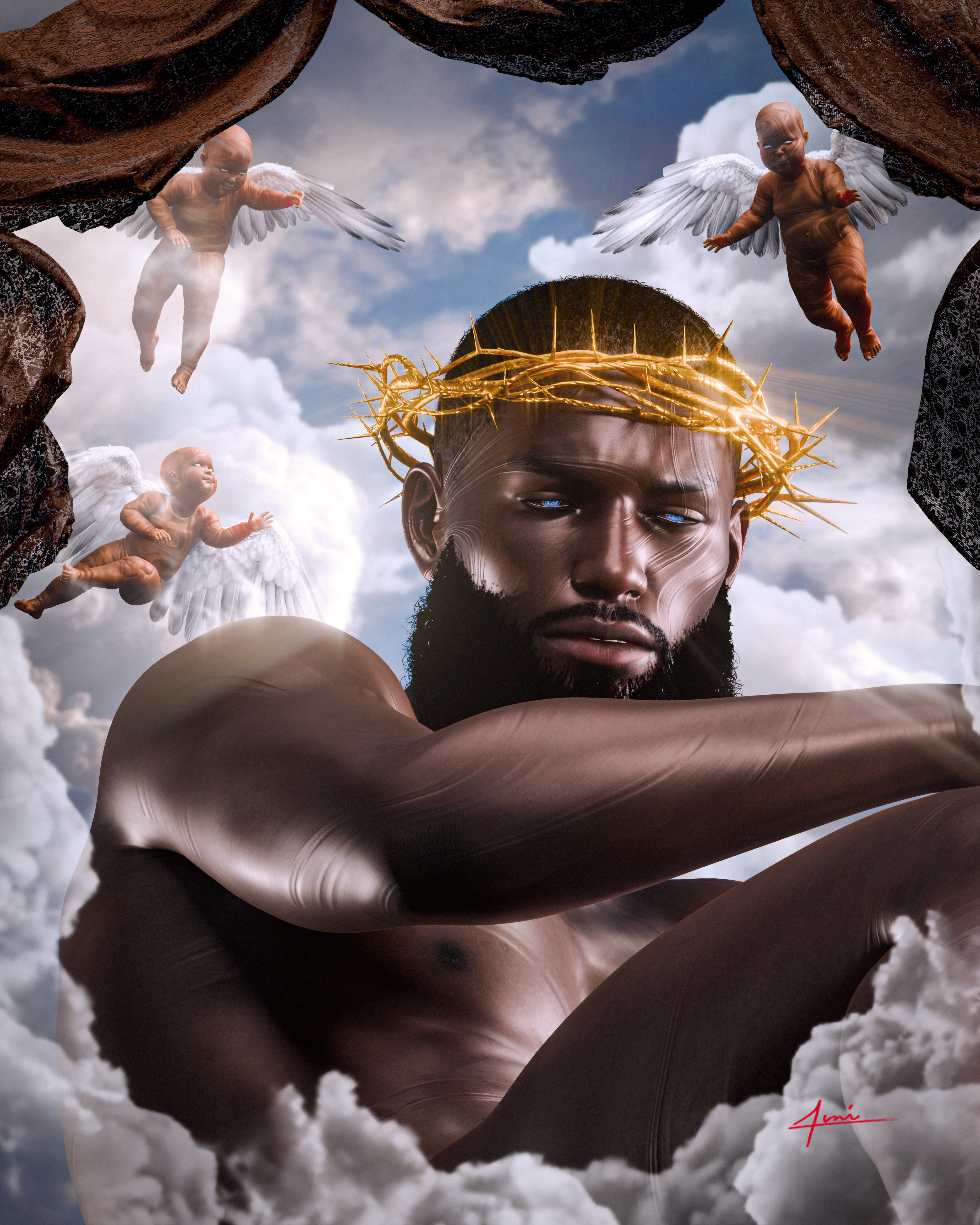
This artwork was created as my official entry for the Stack & Hustle Abuja Graphic Designers and Illustrators Contest, under the Rendering category. From the very beginning, my intention was not just to make something visually striking, but to make a statement about where art has come from, where it is now, and where it’s […]
This artwork was created as my official entry for the Stack & Hustle Abuja Graphic Designers and Illustrators Contest, under the Rendering category. From the very beginning, my intention was not just to make something visually striking, but to make a statement about where art has come from, where it is now, and where it’s going.
My core motivation was to bridge three worlds:
The discipline and visual language of the Old Masters, particularly the Renaissance era
Modern digital technology and 3D rendering workflows
An African perspective, both in form, identity, and narrative weight
I deliberately drew inspiration from Renaissance compositions the dramatic poses, divine symbolism, sculptural anatomy, and painterly lighting seen in classical works. However, instead of recreating them traditionally, I reinterpreted those ideas through modern rendering technology, using 3D as my canvas.
At the same time, I infused the piece with an African outlook. The subject’s features, skin tone, strength, and presence were intentional. This was important to me; placing African identity confidently within a visual space that has historically excluded it, especially in classical “divine” or mythic representations.
From a technical standpoint, the artwork was also a direct response to the fundamentals of strong rendering:
• Lighting: Carefully controlled to echo Renaissance chiaroscuro while remaining physically believable in a 3D environment.
• Textures: Skin, fabric, metal, and clouds were treated with realism and subtle imperfection to avoid a synthetic feel.
• Reflections: Used selectively to enhance material definition without overpowering the composition.
• Volumetrics: Clouds, atmosphere, and light rays were layered to create depth, scale, and a sense of transcendence.
Every element was intentional. The angels, clouds, crown, and environment all serve the idea of divinity, burden, power, and reflection, echoing classical themes while speaking in a modern visual language.