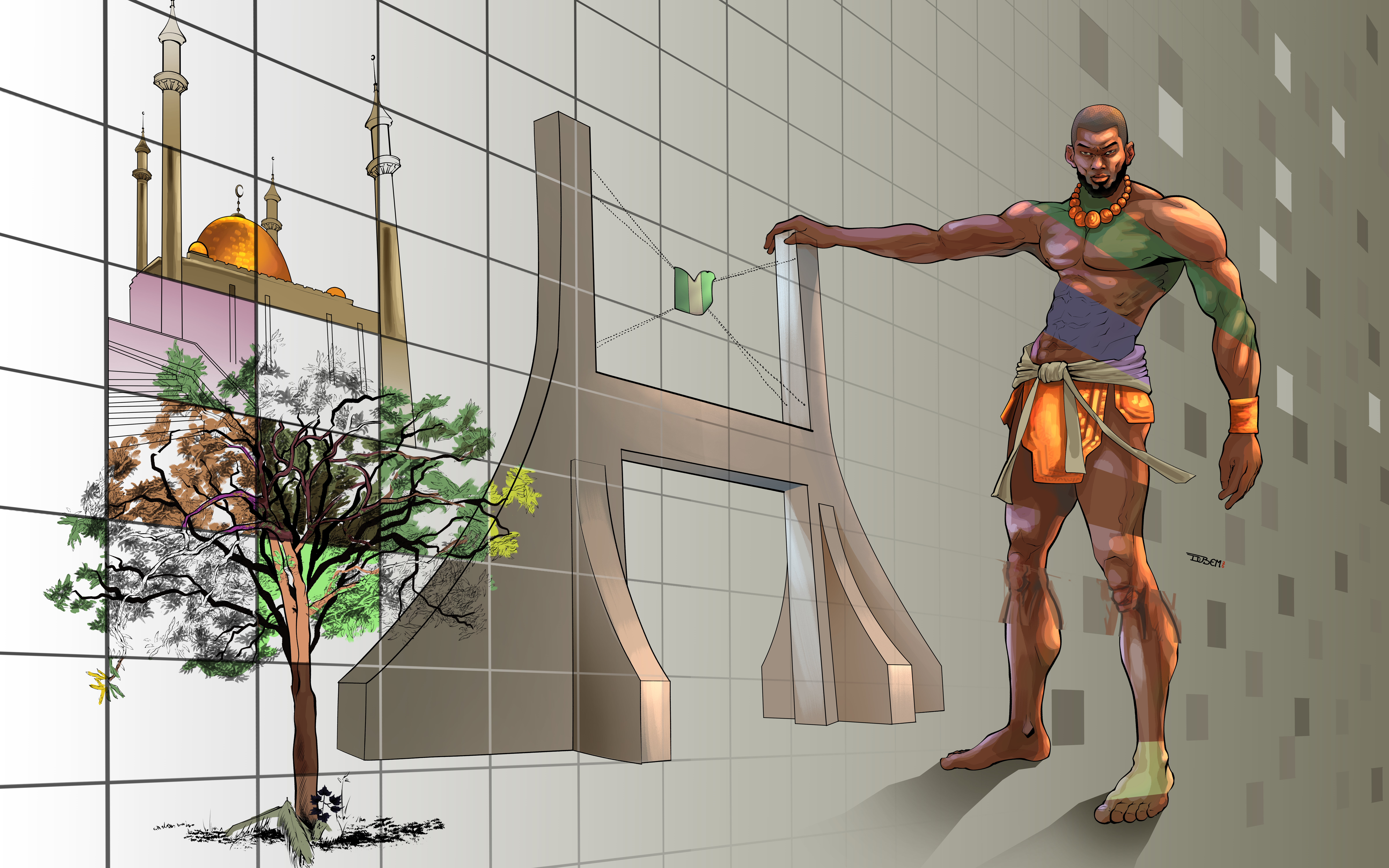
In any digital canvas, everything begins with a grid. The lines stretch across the space like invisible rules guiding, measuring, holding every element in place. At first, it looks simple: a tree, a monument, a mosque in the distance, and a lone warrior standing tall. But like every story of a nation, nothing here exists […]
In any digital canvas, everything begins with a grid.
The lines stretch across the space like invisible rules guiding, measuring, holding every element in place. At first, it looks simple: a tree, a monument, a mosque in the distance, and a lone warrior standing tall. But like every story of a nation, nothing here exists on just one layer.
The tree grows from the soil, its roots buried deep in history. It represents the land itself, ancient, patient, and alive. Seasons may change, storms may come, yet it stands, reaching upward.
Behind it rises the mosque, a symbol of faith and culture. Its domes and towers remind the people that belief and tradition shape the spirit of a nation.
At the center stands a monument, solid and deliberate. It marks the struggles and victories carved into the country’s past moments that built the foundation of today.
And then there is the warrior.
He is not just a man but a representation of strength, resilience, and the enduring will of the people. His stance is calm but powerful, as if guarding everything behind him: the land, the culture, the memories.
The grid holds them all together.
Each object exists on its own layer, separate yet connected. Just like Nigeria itself; different histories, beliefs, and people stacked together to form one complex picture. Remove one layer, and the story changes. Keep them all, and the image becomes whole.
Through structure and balance, the message remains clear:
Nigeria is built on many layers, but together they stand strong.
Stand strong, Naija!